Mangala Samant: The Story of a Life That Inspired Thought- Part 1
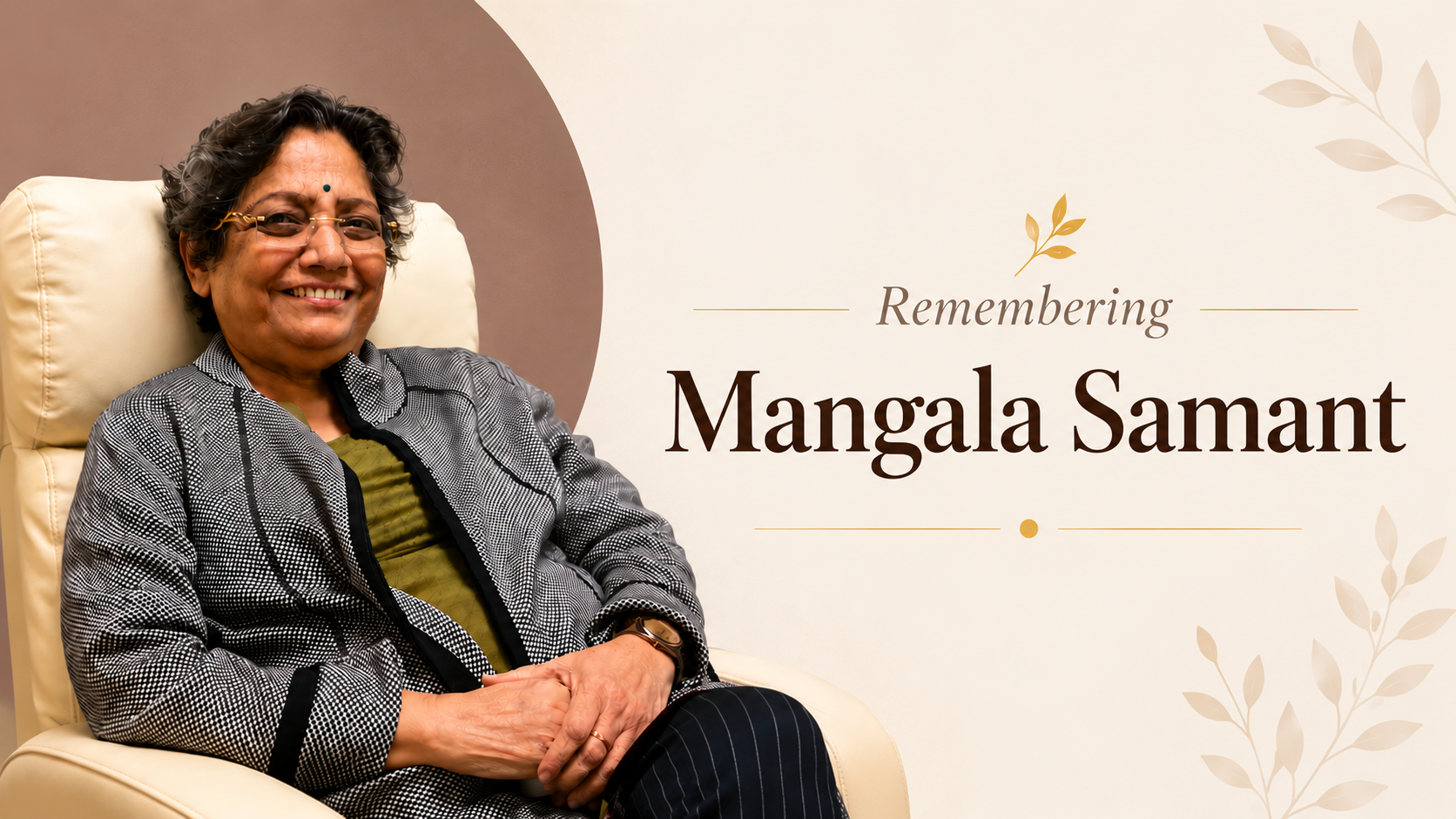
Mangala Samant was a feminist thinker, writer, social activist, and one of the distinctive voices in Maharashtra's progressive intellectual tradition. Closely associated with the Miloon Saryajani movement, she spent decades writing, researching, and engaging with questions of gender, society, culture, and history, while also working directly with women and children at the grassroots. Her books and essays invited readers to question inherited beliefs and imagine more just and equitable ways of living, leaving behind a body of work that continues to inspire new generations. Yet every public life has a private story. In this deeply personal memoir, her daughter Maithilee Samant takes us beyond the author and activist to the mother, learner, mentor, and human being who shaped her family with the same curiosity, compassion, and intellectual courage that defined her public life.
Where the Seeds of Thought Were Sown
Today, Mangala Samant is remembered as a feminist, social activist, writer, and public intellectual. Yet many facets of her life never reached her readers. I want to write about the Mangala Samant who, before anything else, was my mother. Mangala Samant was born in 1947 in Belgaum, just as India stood on the threshold of independence. Her parents, Rajaram and Yashomati Patkar, were living in Mumbai at the time, and Mangala was their second daughter.
My grandfather, Rajaram Patkar, was a freedom fighter and an active participant in Mahatma Gandhi's Quit India Movement. He was also a gifted artist with remarkable versatility. Painting, devotional singing, dance, and cartooning were all part of his repertoire, and he used these artistic talents to inspire people during India's struggle for independence. One of his political cartoons, published shortly before the British left India, became especially well known during that period.
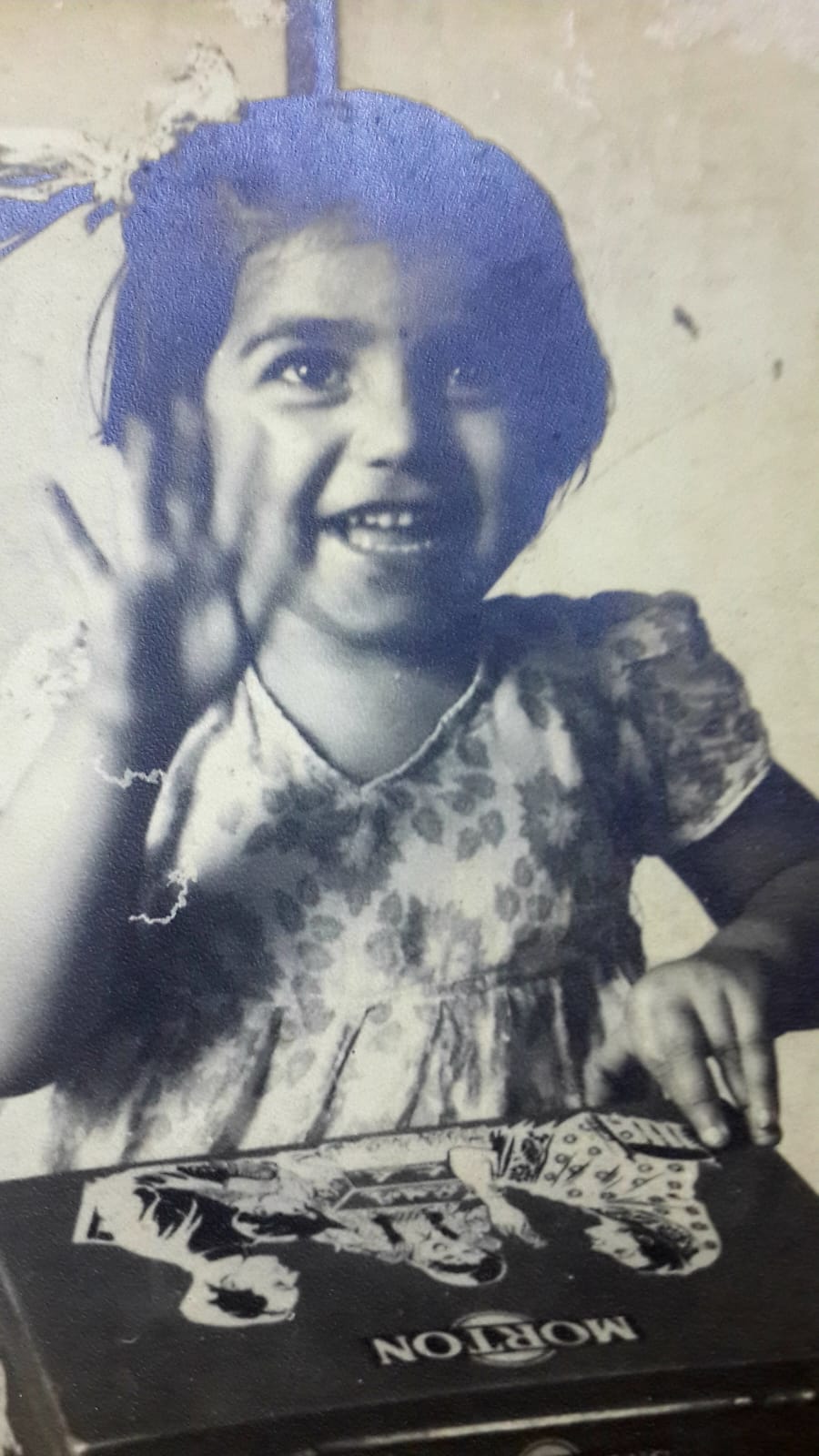
After my mother, two sons were born into the family. Thus, four children grew up together in a modest chawl in Mumbai. Although our family originally came from the Konkan region, my grandparents had moved to Mumbai in search of livelihood and opportunity. After India gained independence, my grandfather accepted a position as an art teacher at Chhabildas School. It was there that his niece, Sunita Thakur, also taught, as did the renowned Marathi writer and humorist Purushottam Laxman Deshpande (Pu. La. Deshpande). My mother's childhood unfolded in an environment enriched by artists, writers, educators, and intellectuals.
Although my grandfather was deeply committed to Gandhian ideals, he never imposed his beliefs on others or expected anyone to live as he did. He himself remained steadfast throughout his life, wearing only khadi and living according to Gandhian principles, but he believed that every individual should be free to choose their own path.
My grandmother, Yashomati Patkar, was herself a matriculate at a time when educated women were exceedingly rare. She worked as a teacher and firmly believed that education should be equally available to sons and daughters alike. In the social climate of the late 1940s and 1950s, this was a remarkably progressive outlook.
My mother was exceptionally bright from a very young age. She consistently ranked first in school, not because she was driven by competition alone, but because she believed in giving her very best to whatever she undertook. Excellence became her lifelong habit. As a result, my mother's education was nurtured with the same seriousness and commitment that would have been devoted to any son. Building upon this strong foundation, she earned a Master's degree in Mathematics from Ruia College and began teaching mathematics at King George High School. It was during this period that her parents began thinking about her marriage.
Choosing Merit Over Comfort
My mother was a beautiful woman. She had long black hair, a fair complexion, and a radiant smile. By the standards of her time, she was considered exceptionally attractive. Combined with her education and accomplishments, she received many excellent marriage proposals. But wealth alone never impressed her.
She wanted a partner who had built his life through intellect, perseverance, and hard work. For her, richness of thought mattered far more than material prosperity. It was during this time that she met my father, Dr. Lalit Samant.
He was pursuing his Ph.D. in Civil Engineering at the Indian Institute of Technology (IIT) Bombay. Coming from a financially modest background, he had reached that stage entirely through his own merit, determination, and relentless effort. My mother admired that deeply. Although my father lived with his large family in a very small home, she was far more drawn to his intellect, his curiosity, and his love of learning than to his financial circumstances.
Before deciding to marry him, they met several times. During one of those meetings, my mother asked him, "What do you do for enjoyment?" He answered simply, "I read." That one sentence stayed with her forever.
She knew that marrying him would not mean an easy or financially comfortable life. Yet she believed that a man with such intellect and determination could overcome any hardship through his own abilities. Leaving behind the comfort of her parents' well-to-do home in Bandra, she willingly chose to begin married life in my father's small home in Kurla.
Together, they decided that their wedding would be simple and free of unnecessary rituals. They were married through a civil registration ceremony at home in Mumbai, reflecting the values they both shared. After marriage, my mother continued teaching mathematics at King George High School while my father completed his doctoral studies.
About a year later, I was born. A few months after that, my father accepted a position in Indore, and our young family moved there. We spent several years in Indore before returning to Mumbai. It was after our return that my younger brother, Satyajit, was born. Eventually, we settled in Goregaon, where my father worked at Tata Consultancy Services. Later, he received an opportunity to work in Iraq for several years and moved overseas.
During those years, my mother single-handedly managed every aspect of our lives. She cared for our education, our daily routines, our meals, our home, and every responsibility that came with raising two young children while her husband worked abroad. One incident from that time has remained with me ever since.
My brother Satyajit was very young. One day at school, his teacher asked the children to write their own name and the name of a parent. He wrote his own name. For "Parent," he wrote: Mangala Samant. His teacher gently corrected him. "You are supposed to write your father's name here." Satyajit looked at her with complete innocence and replied, "But my mother is my parent. She brings me to school, she takes me home, and she does everything for me." The teacher had no answer. In the end, she allowed him to leave my mother's name exactly as he had written it.
When Satyajit brought the paper home, my mother laughed as she told us the story. At the time, she simply found it amusing. Looking back now, however, I feel that this was perhaps one of the moments when the questions surrounding women's independent identity began taking deeper root in her own thinking.
My father played an equally significant role in shaping her intellectual life. He was deeply rational and scientific in his outlook. Shortly after their marriage, my mother thought she should change her first name, as many women traditionally did after marriage. My father asked her, "Why should you? Your parents gave you a beautiful name with love. Why should you change it?" For that generation, this was an unusually progressive perspective.
His intellectual interests were vast. Science, history, world civilizations, politics, and culture fascinated him. His wide reading broadened my mother's own horizons, and she embraced that opportunity wholeheartedly. One of my earliest memories is from when I was eight or nine years old. After my brother and I had gone to bed, my mother would sit beside us reading or studying. Sometimes she was preparing for law examinations. Later, she pursued a Master's degree in History. Books, notebooks filled with careful notes, and the quiet determination to keep learning became permanent features of our home. My father was equally devoted to learning.
Our house overflowed with books. Even as children playing nearby, we would overhear long conversations between my parents about science, history, society, philosophy, and the larger questions of life. Only much later did I realize how profoundly those conversations shaped the way my brother and I learned to think about the world. They gave us something far more valuable than education—they taught us how to be lifelong learners.
The Values That Shaped Our Home
The 1980s were a defining decade for the women's movement in Maharashtra and across India. The writings of Vidya Bal, the growing anti-dowry movement, the national outrage following the sati of Roop Kanwar in Rajasthan, and the increasing reports of dowry deaths had ignited serious public debate. Films such as Arth, starring Shabana Azmi and Smita Patil, challenged conventional ideas about marriage and women's identity.
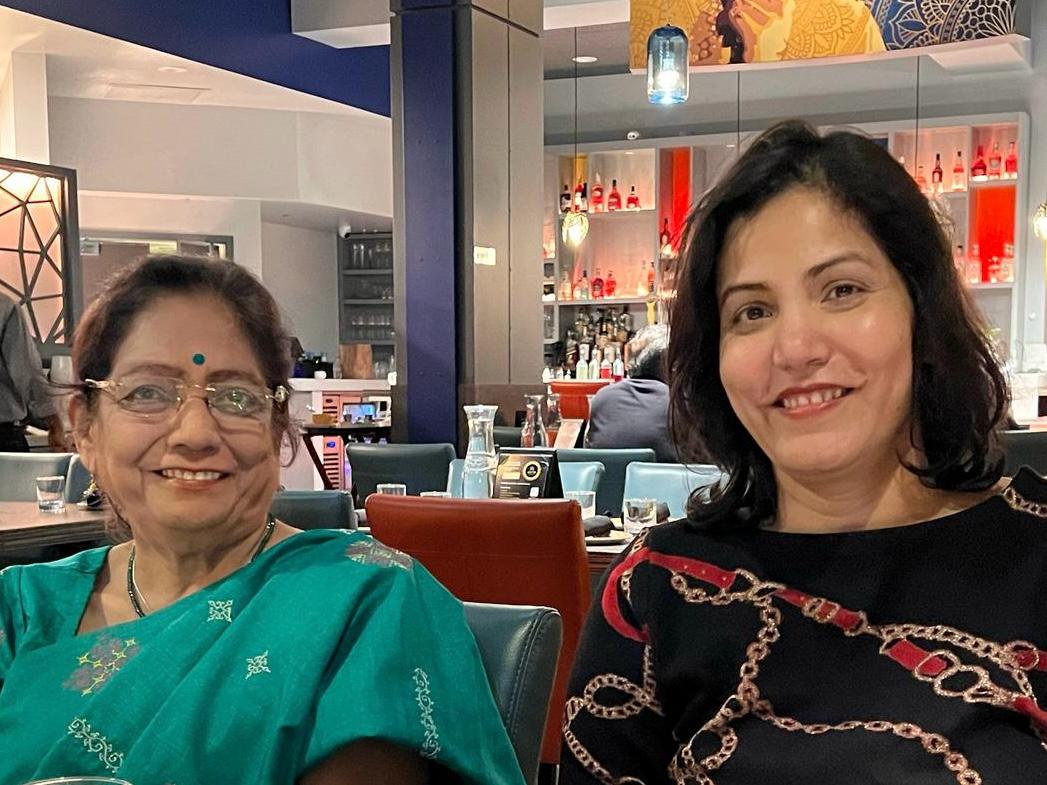
My mother was not merely an interested observer of these social changes—she was an active participant. She founded a small periodical called Sahajeevan, through which she wrote extensively about the social condition of women, the challenges they faced, and the paths toward greater equality and independence. Through her writing, she consistently questioned the deeply rooted belief that women occupied a secondary place in society.
Around this time, we organized a small exhibition of anti-dowry posters. I was only in the second or third grade, but my mother asked me to create many of the posters. Under her guidance, I drew and painted them, and together we mounted the exhibition. One slogan has stayed with me all these years: "Did you educate your son so that he could demand a dowry?"
The central message was simple yet powerful: education should make a person self-reliant, not justify unjust traditions such as dowry. Around the same time, the Marathi play Mulgi Zhali Ho ("A Girl Is Born") was making a profound impact. We watched one of its performances, and I know it deeply influenced my mother's thinking. The exhibition we organized a few months later was, in many ways, a continuation of that evolving intellectual journey.
There were many such initiatives. She believed that ideas should not remain confined to books—they should find expression in society. During this period, my father returned from Baghdad. While living there, he had immersed himself in the music, films, and cultures of many different countries. I remember him returning with an entire bag full of cassette recordings of radio music from abroad, along with children's films and documentaries that were almost impossible to find in India at that time.
This was the early 1980s. For most Indian families, exposure to international cultures was extremely limited. But our home welcomed the best from around the world. We listened to ABBA, Japanese music, and music from many other cultures. We were introduced to science, art, literature, and ideas that stretched far beyond our immediate surroundings.
I still remember my father making scrambled eggs for us one day. It may sound like a trivial memory today, but in the early 1980s it was an unfamiliar dish in a traditional Indian household. For us, it symbolized curiosity and openness to new experiences. One principle was deeply embedded in our upbringing:
Every culture has something worth learning. We were never taught to dismiss other cultures as inferior. Nor were we taught that everything Western was automatically superior. Instead, my parents encouraged us to examine every culture with discernment—to appreciate what was valuable, reject what was not, and always think for ourselves.
Despite their broad exposure to the world, they chose to educate both my brother and me in Marathi-medium schools. Their reasoning was simple. They believed that children should first become deeply rooted in their own language, literature, and cultural heritage. English could always be learned later, but the emotional depth and richness of one's mother tongue had to be cultivated during childhood.
Some of my happiest childhood memories are connected to school vacations. Every summer and every Diwali holiday, my mother would bring home a large stack of books for me. I would eagerly wait to discover what new worlds those books would open. She had an extraordinary gift for selecting books. Jayant Narlikar's science writing. Pu. La. Deshpande. Chi. Vi. Joshi. Russian children's books translated into Marathi. Stories about scientific discoveries, chemistry, physics, great artists, inventors, and explorers.
My father, too, brought us remarkable books, including Marathi translations of Arabian Nights and many works that were not easily available elsewhere. Television, at the time, consisted almost entirely of Doordarshan. Yet my parents carefully sought out programs that stimulated curiosity and imagination. We watched Star Trek, Carl Sagan, and documentaries about science, space exploration, and discovery. Looking back now, I realize that my parents gave us much more than an education.
They taught us how to look at the world. They taught us to ask questions. They taught us that wisdom could be found anywhere, provided we remained open enough to recognize it. Their greatest gift to us was not knowledge itself, but a lifelong love of learning.
Turning Ideas into Action
Toward the end of the 1980s, my father's new job brought our family from Mumbai to Pune. For all of us, it was a significant transition. A new city, new schools, new friends, and an entirely different environment. In Mumbai, we had been surrounded by relatives; in Pune, we were largely on our own. Although we missed the closeness of our extended family, those years became some of the richest of our lives.
Around this time, an incident occurred that has remained deeply etched in my memory. While we were still living in Mumbai, a young girl used to help my mother with household chores. She had lost her mother at an early age and was being raised by her grandmother. At one point she contracted tuberculosis.
In those days, TB carried enormous fear and stigma. Yet my mother personally took responsibility for her treatment. She arranged for her medical care, ensured she received her medication, and looked after her until she fully recovered.
Looking back, I realize that my brother and I were still young children ourselves. There was undoubtedly some risk involved. But for my mother, saving a young girl's life mattered more than her own comfort or convenience. A few years after we had settled in Pune, that same girl appeared unexpectedly at our front door.
She was barely fourteen or fifteen years old. She had been forced into marriage and had run away. Without a moment's hesitation, my parents welcomed her into our home. They accompanied her to the police station, helped file a legal complaint, and stood firmly beside her through the entire process. Her husband came to our house more than once, attempting to intimidate us, but my parents refused to back down. Eventually, they helped her obtain legal freedom from that marriage.
Then they did something even more important. They enrolled her back in school. They ensured she continued her education. They gave her the opportunity to rebuild her life. Today she is a successful entrepreneur, standing proudly on her own feet. Looking back, I realize that my mother's feminism was never merely an intellectual position. Whenever she encountered a woman facing injustice, she did not simply write about the problem. She stood beside her. That was her feminism.