Mangala Samant: The Story of a Life That Inspired Thought- Part 2
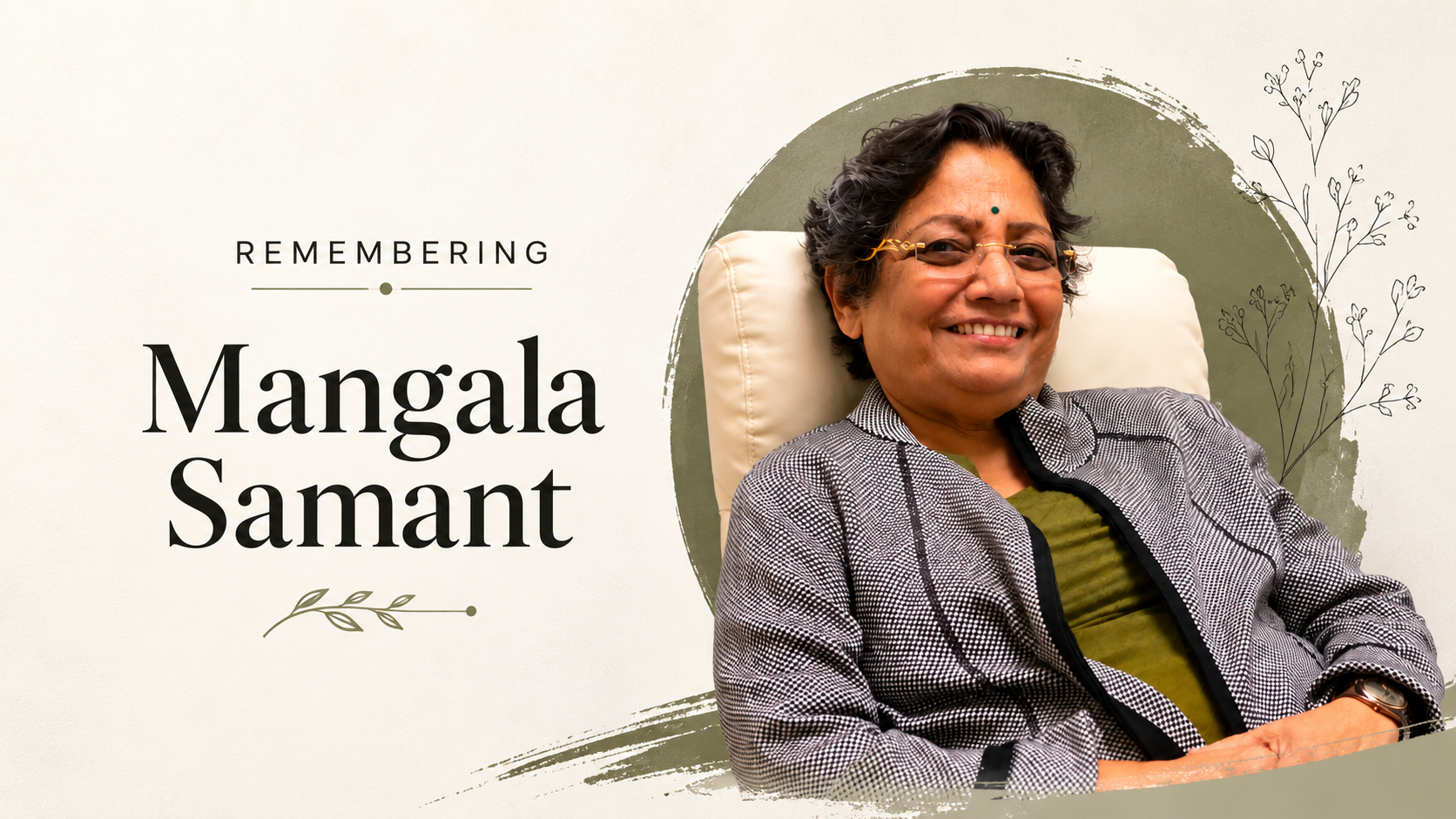
The first part of this memoir traced the formative years that shaped Mangala Samant's worldview and values. In this concluding part, Maithilee Samant reflects on her mother's most productive years as a writer, feminist thinker, researcher, and grassroots activist, while also revealing the quieter acts of generosity, mentorship, and conviction that touched countless lives beyond the public eye. More than a biography, this memoir is a daughter's tribute to a remarkable woman whose legacy lives on not only through her books and ideas, but also through the people she inspired to think critically, learn continuously, and work towards a more just society.
Bhondala and Cindrella
After moving to Pune, I also witnessed another side of her thinking—her remarkable ability to reinterpret tradition rather than reject it. One day, while talking about the traditional Bhondla festival celebrated by young girls in Maharashtra, she explained that the original purpose of those songs had been deeply meaningful.
In earlier times, girls were often married at a very young age, usually without any choice in the matter. Bhondla gave women a rare opportunity to gather together, share their experiences, and quietly prepare younger girls for the realities of married life. The intention behind the tradition, she believed, had been compassionate. But times had changed. Continuing to sing songs that taught girls their highest aspiration was simply to find a good husband no longer reflected the society they were growing up in.
The spirit of the tradition deserved to be preserved. Its message did not. So my mother wrote an entirely new set of Bhondla songs. She kept the familiar melodies but replaced the words. Instead of wishing girls a good husband, the songs celebrated education, independence, confidence, and the ability to make one's own decisions. We took these songs to Modern High School for Girls in Pune, where the school welcomed them. For several years, generations of girls sang my mother's rewritten Bhondla songs during their annual celebrations.
Sadly, we never preserved those handwritten lyrics. That remains one of my greatest regrets. The songs themselves may have disappeared, but the ideas they planted continue to live on in the minds of those who sang them.
Another memory from those years has stayed with me just as vividly. Our school was preparing to stage Cinderella. At that time, even Western fairy tales like Cinderella and Sleeping Beauty were regarded as refreshingly modern. When my mother heard that we were performing Cinderella, she smiled and said, "Let me give you a different Cinderella." And she did. She wrote an entirely new version.
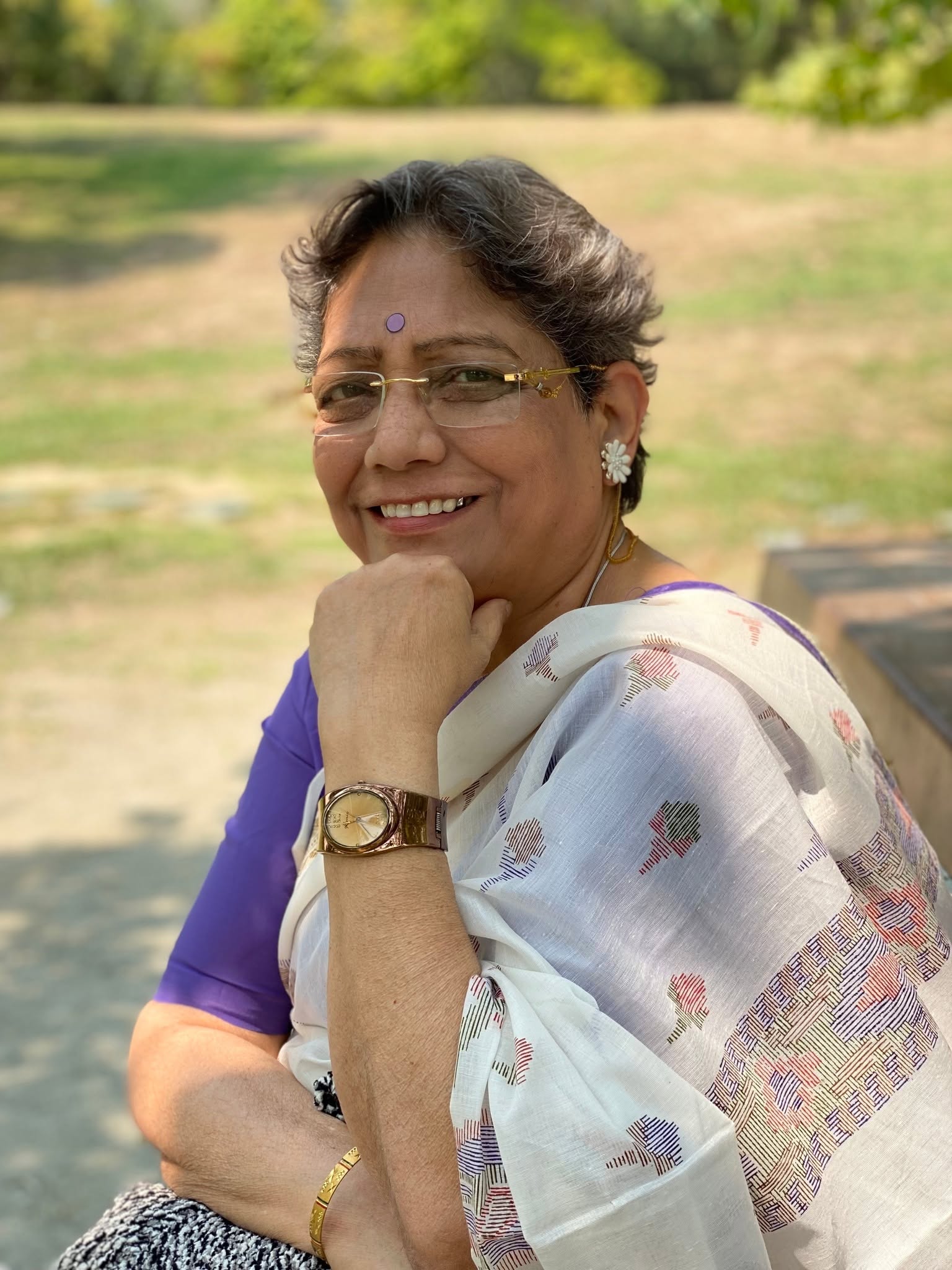
In her Cinderella, no prince arrived to rescue the heroine. She rescued herself. She overcame adversity through her own intelligence and courage. Only afterward did she meet the prince—not as someone waiting to be saved, but as an equal. We performed that play when I was in middle school. At the time, it simply felt like an unusual script. Today, I realize how remarkably forward-thinking it was.
Long before we encountered ideas about women's empowerment in books or universities, we had already performed them on stage. Looking back, I understand that my mother was quietly reshaping the imagination of an entire generation. That modern Cinderella belonged entirely to her vision.
Scholarship, Writing, and a Life of Service
The 1990s marked the most intellectually productive period of my mother's life. She became a regular visitor to Pune's major libraries, including the British Library and several other research libraries. She would borrow large reference books, spend countless hours reading, taking meticulous notes, and reflecting deeply before putting her thoughts into writing. Although she had already earned a Master's degree in Mathematics, her intellectual curiosity was far from satisfied. She went on to pursue postgraduate studies in History and Sociology, expanding the historical and social foundations of her thinking.
She immersed herself in the study of Mughal history, ancient civilizations, and the evolution of early human societies. She was particularly influenced by the work of Robert Briffault, whose extensive research on matriarchal societies opened new perspectives for her own thinking. Years of reading, research, and reflection culminated in her landmark book, Stri Parva.
Even today, Stri Parva is regarded as one of the most important Marathi works that places feminist thought within a historical framework. For many students and scholars, it continues to serve as an important reference. Around the same time, she founded Nigrani, a community organization dedicated to working with children from underprivileged neighborhoods near our home in Kothrud, Pune. Along with a group of like-minded friends, she devoted herself to helping these children through education, mentorship, and personal attention. Teaching them, encouraging them, and opening new opportunities for their future became another important chapter in her life.
Matron at the Vidyarthi Sahayyak Samiti Girls' Hostel During this period, my mother—and indeed our entire family—made an unusually courageous decision. She had been offered the opportunity to serve as the Matron of the girls' hostel at Vidyarthi Sahayyak Samiti in Pune. We were a financially secure family, and there was no economic necessity for her to take up a job. But she genuinely wanted to do this work. It wasn't simply employment that attracted her; she saw it as an opportunity to make a meaningful difference in the lives of young women.
.jpeg)
That opportunity, however, came with a significant sacrifice. The position required her to live at the hostel. At the time, I was in the crucial years of eleventh and twelfth grade. My younger brother, Satyajit, was still quite young, and my father traveled frequently for work. As a family, we made an unconventional decision. My mother and Satyajit moved into the hostel at Vidyarthi Sahayyak Samiti, while I stayed at home with my father so that I could continue my studies. Many people found this arrangement astonishing. It was not a decision that families commonly made in those days. But to us, it felt entirely natural. Supporting my mother's work and her sense of purpose mattered more than following convention.
Over the next year or two, she devoted herself wholeheartedly to the young women in the hostel. She organized cultural programs, choreographed dance performances, prepared students for annual gatherings, mentored them, and stood beside them as they navigated both academic challenges and deeply personal struggles.
I still remember that many of those young women would come to our home seeking her advice about problems in their personal lives. My mother would listen patiently, without judgment, and guide them with empathy, wisdom, and remarkable sensitivity.
Looking back, I realize that for my mother, education was never confined to textbooks or classrooms. Its true purpose was to give a young person the confidence to stand on her own feet, to remain by her side during life's difficult turning points, and to help her discover her own path. That, to my mother, was the real meaning of education.
Passing of Life Partner
In 1997, my father passed away unexpectedly from a heart attack. My mother was only fifty years old. Our family entered a new phase. I eventually settled in the United States, while my younger brother, Satyajit, made Australia his home. My mother wholeheartedly encouraged both of us.
Like my father, she believed that the world itself was our home. She never believed that one's opportunities should be limited by geography. She often told us, "Go wherever your ideas can flourish. Live wherever your abilities find the greatest opportunity." Even after losing her husband, she never withdrew from life. She continued writing. She continued serving society. She continued helping people. Her work became not a distraction from grief, but a way of living through it.
Over the following decades, her essays appeared regularly in newspapers and journals across Maharashtra. She wrote about contemporary social issues, forgotten women in history, deeply rooted cultural biases, and the historical origins of customs that had long been accepted without question. She never rejected tradition simply because it was old. Instead, she asked deeper questions. Where had a tradition come from? What purpose had it originally served? Had that purpose been forgotten? Could it be reinterpreted for a more just society?
Her writing consistently invited readers to think critically rather than simply accept inherited beliefs. Many of these newspaper articles, written over several decades, were recently collected and published by Sakal Publications under the title Tantotant ("Exactly As It Is"), bringing together a lifetime of thoughtful public engagement.
A Lifelong Student
One of the qualities I admired most about my mother in her later years was her extraordinary discipline. Even in her seventies, every article she wrote was carefully organized into subject-wise folders. Every reference, every note, every source book was meticulously catalogued.
For someone of her generation, this level of organization was truly remarkable. She taught herself how to use a computer. She learned to use a smartphone. She embraced new technology instead of fearing it. To be honest, none of this surprised me.
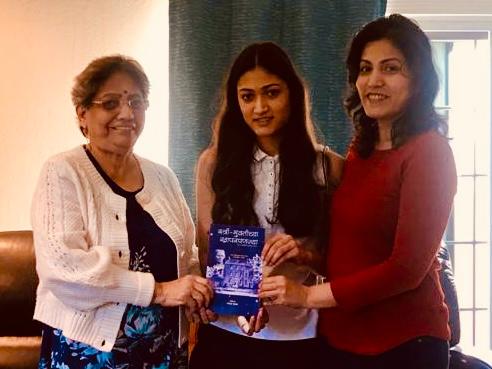
I had always known her as someone who was endlessly curious and intellectually fearless. Some of my fondest recent memories are from the years she spent with us in the United States during the COVID-19 pandemic. Around that time, her book Stri Muktichya Khapar Panajya was published. When the copies finally arrived at our home, we celebrated together as a family. Every time one of her books was published, her face lit up with the same excitement one might expect from a first-time author. Behind every book were years of reading, research, writing, and patient perseverance. And every new publication brought her immense joy.
Recognizing Potential in Others
My mother encouraged countless people to continue learning, develop new skills, and believe in themselves. One remarkable example was Pushpatai, who worked in our home doing household chores. She had received very little formal education. But my mother immediately recognized her intelligence. She would constantly encourage her. "You can do this." "Try." "Go learn it." Those simple words changed the course of Pushpatai's life. Gradually she learned to use computers. She learned typing. She learned to ride a scooter. Eventually she even learned to drive a car. Over time, she acquired the skills to handle many kinds of office work and administrative responsibilities.
Today, she is no longer limited to domestic work. She confidently manages professional responsibilities that once would have seemed unimaginable. After my mother's passing, I spoke with Pushpatai. She told me something I will never forget. She said, "In many of the homes where I worked, people would tell me, 'This isn't for you. You won't be able to do it.' But Tai always said exactly the opposite. She would tell me, 'You can do it. Try. Learn.'"
Perhaps that was the difference. One person saw only limitations. Another saw possibilities. Pushpatai often says that her life changed because of those simple words: "You can do it." There are many such stories. My mother had an extraordinary gift for recognizing hidden potential in people and helping them discover it for themselves.
Her Legacy
Today, my mother is no longer with us. She passed away at the age of seventy-nine due to complications arising from pneumonia and diabetes. But what she truly left behind was not simply a body of work. Her real legacy lies in the qualities that defined her: an insatiable curiosity, a lifelong commitment to learning, an instinct to encourage others, the courage to challenge convention, the discipline to study deeply, the ability to think beyond the immediate, a perspective that understood the present through the broad sweep of history, and a vision that constantly looked toward the future.
These are the gifts she has passed on to me, and they are the inheritance I value most. In my own way, I will do my best to carry that legacy forward. I am certain that her ideas will continue to reach future generations through her books, her essays, and the countless lives her work has touched.
In the later years of her life, her contributions received the recognition they so richly deserved. Just a few months before her passing, she was honored with the Maharashtra Sahitya Puraskar, a fitting acknowledgment of her decades of thoughtful and significant contributions to Marathi literature.
The award was followed by an extraordinary outpouring of affection from her readers. Many created videos and reels featuring her books, read aloud passages that had deeply moved them, and shared heartfelt reflections on how her writing had influenced the way they thought about the world. For a writer, there can be no greater validation than knowing that one's words continue to live in the minds and hearts of readers.
On this occasion, I would especially like to thank Sheetal Patil, Sneha Tompe, and Sanjay Mense. They not only introduced my mother's books to new readers but also played an important role in carrying her ideas forward. I remain deeply grateful for their generosity, affection, and wholehearted efforts.
My mother would never have wanted people to mourn her endlessly after she was gone. Instead, she would have wished for them to draw inspiration from her work, her ideas, and the life she lived—to think independently, to question fearlessly, and to make positive changes in their own lives.
And so, rather than dwelling on the sorrow of her passing, the truest tribute we can offer her is to remember the life she lived, preserve the ideas she gave us, and carry forward the values and contributions she made to society through our own thoughts and actions. That, I believe, is the most meaningful and enduring homage we can pay to her.