Gender, Technology and Environment
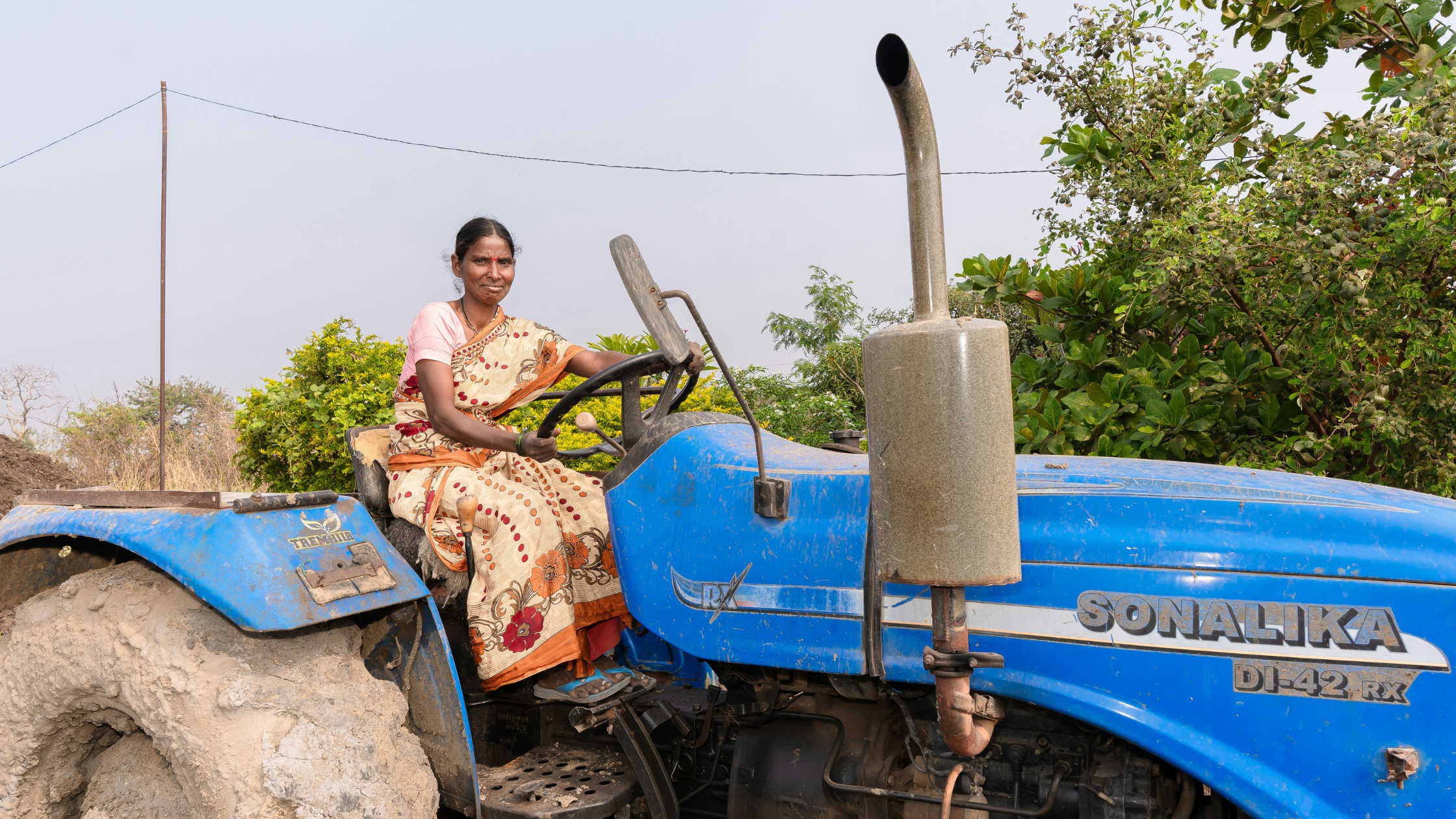
In this article, Prof. Vibhuti Patel, former Professor at the Advanced Centre for Women’s Studies, Tata Institute of Social Sciences (TISS), and former Head of the Economics Department at SNDT Women’s University, explores how technological change has shaped women's work and lives across sectors. She argues that while technology has opened new opportunities, its benefits have not been equally shared, particularly for women in informal employment and rural communities. The article highlights the need for gender-responsive policies that ensure technological progress promotes equity, dignity, and social justice rather than reinforcing existing inequalities.
Introduction
Women of the developing countries are seen as the most flexible of the world's labour force. The lower supply price of these women provides a material basis for the induction of poor working-class women into export industries such as electronics, garments, sports goods, toys and agro-industries. Innumerable researches have revealed that in many of the poorer countries, women are rigorously socialised to work uncomplainingly, under patriarchal control, at any allotted task however dull, laborious, physically harmful or badly paid it may be. In the ever expanding export-oriented industries, the production of leather goods, toys, food-products, garments, diamond and jewellery, piece-rate female labour is employed, working from sweatshops or from home. They face triple oppression as they are subjected to race and colour prejudices as well as class exploitation. Women workers in the unorganised sector have shouldered the heaviest of burden of increased labour intensity without rise in real income and intersectional vulnerabilities of caste, gender, class, ethnicity.
The relationship between the formal sector and the decentralised sector is a dependent relationship where the formal sector has control over capital and markets and the 'informal' sector works as an ancillary. In India, 94% of women work in the decentralised sector, which has a high degree of labour redundancy and obsolescence. These women have less control over their work and no chance for upward mobility because of temporary, routine and monotonous work. In the agrarian sector, the cash crops - fruits, mushrooms, flowers and vegetables, are replacing the traditional subsistence crops where women had important role to play. This process has also intensified immiserisation of women workers in rural areas and has created tremendous food-shortages.
Industrial Technologies and Women
Women have been weeded out of traditional manufacturing sector that constitute textile, jute, small scale industries due to introduction of semi-automated and automated machines. Industrial Training Institutes of the Government give women training only in tailoring and screen printing. The Southern states have started recruiting women to handle new industrial technologies because of shortage male labour as a result of male migration to the gulf countries. All industrial technologies are designed keeping into consideration an average height and body of men. Shramshakti report had demanded that women workers must be given technical training to handle new machineries so that they can get gainful employment in all industrial categories. Reservation of seats for girls and women in engineering college is a welcome move in this direction.
Urban Employment
The number of women professional workers, such as executives, decision-makers in government departments, lawyers, doctors and engineers has increased and will continue to increase, but their strength in the overall economy is miniscule. Industrial disasters such as Bhopal gas tragedy, pollution of air, water bodies and land generated by hazardous industries such as plastic, synthetic fiber, chemicals, and fertilizers have invited attention to environmental safety and occupational issues. Uses of nuclear technology, impact of radiation on women’s reproductive abilities, carcinogenic and mutagenic impact of mercury poisoning are the major controversial issues of the contemporary reality. Agricultural Technologies-Mechanisation, High Yielding Varieties-Green Revolution
Unemployment and underemployment in the rural areas have gained serious proportion because, in the NEP, schemes for rural development and rural industrialisation have not been given any importance.There has already been a major shift in the cropping pattern from subsistence production like rice, millet, corn, wheat to cash-crop production such as fruit, mushrooms, flowers and vegetables. This process has affected women's employment in the agrarian sector. Several studies have shown that a shift from subsistence to cash crop production invariably leads to women being the first to lose their jobs. As a result of shrinking self-employment prospects for women, the large majority of them join the rural and urban reserve army of labour. In rural India, 31 % of total female population is employed as per 2001 census.
Opening up of market since 1-4-2000 for 729 new commodities (240 are agrarian products including rice, meat, milk powder, fruits) that can be imported unrestrictedly have resulted in enormous tragedies resulting into suicides and starvation deaths among farmers and weavers. Prices of rubber, cotton, coconut, coffee, cardamom, pepper, tomatoes, sugarcane and potatoes have crashed. Urban poor women in Kerala and Karnataka are fighting desperate struggles against imports of these items to express their solidarity with their rural and tribal sisters.
Horticulture and Floriculture
Expansion of internal and external markets for horticultural and floricultural products have encouraged many farmers to use their and for fruit and flower cultivation. Introduction biotechnology, food, fruit and flower preservation and processing technologies has given boost to women entrepreneurs getting into this field. In view of the critical role of women in the agriculture and allied sectors, as producers, concentrated efforts will be made to ensure that benefits of training, extension and various programmes will reach them in proportion to their numbers. The programmes for training women in soil conservation, social forestry, dairy development and other occupations allied to agriculture like horticulture, livestock including small animal husbandry, poultry, fisheries etc. will be expanded to benefit women workers in the agriculture sector.
Animal Care and Dairy Development
Self help groups of women are encouraging rural women to consider animal care and dairy development as commercially viable proposition. In the beginning of this sector, women were made to do only drudgery prone tasks such as collection of water and fodder, bathing and milking animals. Men controlled sale of milk and dairy products. Men squandered money and did not contribute to family’s needs. Now, due to pressure of women’s movement, women have managed to get decision-making power and control over finances generated from these activities.
Poultry Development
Government departments as well as the voluntary organisations are encouraging women to start poultry, which is highly labour intensive job. Women have to look after feeding of chicks, observe hatching, carefully collect eggs, clean the area littered with chic droppings. It Chicks fall ill, it can result into loss of business. In this area also, women need scientific training. As women don’t own shops, large storage space or automobile transporting eggs and chicken, they have to depend on men for sale. Thus, in spite of putting in back-breaking labour, women don’t get cash in their hands.
Women in Sericulture
During last 20 years, rural women in most of the Indian states are getting roped in sericulture-cultivation of mulberry, handling silk-warm eggs, monitoring day and night different stages of growth of silk-warms, silk-processing, weaving. Women in sericulture need training in scientific methods of silk and acquaintance modern technologies. Women have to cultivate silk-warms in their own living space. They should be given separate space/workshops for sericulture. Women’s cooperative ventures in sericulture must be provided government support so that they have not to depend on agents. Market for silk products has expanded as variety of pure and synthetic-mix silk is in circulation. The fashion industry has also given boost to silk production. But women workers in sericulture have hardly benefited from the same.
Women in the Fisheries
Women in fisheries have had major setback during last three decades. Concentration and centralization of economic resources in the hands of men in fisheries have rendered women fish vendors pauper in these sectors. Giant multinationals control rights for fish harvesting. They have trawlers, modern technologies for catching fish, fish preservation and processing and transporting fish to local as well as global markets. Young unmarried girls are recruited to join the army of migrant labour force that is employed in the free trade zones for prone and fish processing. Lack of access to technological know-how, limited credit facilities and absence of social security has gone against women fisher folks.
Women and Environment-The Two Way Relationships
Environment and Forest Development has been the crucial concern for sustainable development. Women are employed in wasteland development, social forestry and desert development programmes on a large scale. On the one hand, a resource "crunch" is created where environmentally regenerative programmes are concerned; while on the other hand, millions of rupees are made available for controversial mega projects. Gender implications of climate calamities are devastating for women and girls, which amplify existing gender inequalities and pose unique threats to their livelihoods, health and safety. Women have to face double challenges when faced with climate change as they are at the receiving end and at the same time saviors of survival needs and nurturers. Women often have unequal access to information and resources, and are under-represented in decision-making which makes them even more vulnerable to natural disasters and extreme weather events. Despite women’s vulnerabilities, women’s knowledge and social practices could be used to build community resilience if women were included in the efforts at adaptation and mitigation.
Displacement in the Name of Development
In the name of urban development, the very space to live and work is withdrawn from the urban poor in the informal settlements. The urban poor women have been employed in food, beverage, plastic, textiles, leather, wood / bamboo / cane and ceramics industries. Here too, they have been targets of market volatility and occupational health hazards in the unorganised sector. Women vendors are squeezed out of the marketing, vending spaces because global traders have made local labour and skill obsolete.
Gender audits of mega developmental schemes and programmes have been extremely useful to seal the leakages that dis-empower women and bring to the fore women’s component in terms of employment, educational opportunities, skill development, entitlement and assets ownership.
Capital driven G has perpetrated tremendous human miseries by resorting to forced eviction of poor people from their dwelling place and work place. While commenting on the forced eviction to accommodate mega projects, the UN Committee on Economic, Social, and Cultural Rights, Sixteenth Session, 1997 stated: “Women and other vulnerable individuals and groups suffer disproportionately from the practice of forced eviction. Women in all groups are especially vulnerable given the extent of statutory and other forms of discrimination which often apply in relation to property rights (including home ownership) or rights of access to property or accommodation, and their particular vulnerability to acts of violence and sexual abuse when they are rendered homeless.”
Displaced Population due to Natural as well as man-made disasters
Women, the greatest victims of natural disasters such as floods, earthquakes and social disasters such as caste, communal, ethnic conflicts and war and economic disasters in the name of development (building 350 flyovers in Mumbai, mega plants, shopping plazas displacing people) need rehabilitation in terms of proper housing, civic amenities, safe transport and work.
In the 1980s, governments and development agencies became much more aware of the need to consider gender issues in their environmental and natural resource management programmes. This led to changes in project design and implementation. Eco-feminists have played crucial role in evolution of new gender-sensitive approach among the policy makers. But in actual practice, the economic vested interests have reigned supreme.
Gender Audits of Water policy
Gender economists have critiqued the watershed management and rainwater harvesting programmes that focuses solely on water-utilisation for agriculture and industry. As mass of rural and urban poor women have to spend many hours and devote for drinking water and water for household consumption. Policy makers first came to appreciate that women 'play an essential role in the management of natural resources, including soil, water, forests and energy...and often have a profound traditional and contemporary knowledge of the natural world around them'. The exclusion of women from environmental projects - through outright neglect or belief in the gender neutrality of projects - would thus be a recipe for project failure.
Subsequently, donor agencies came to see women as especially vulnerable: 'their responsibilities as day-to-day environmental managers ...make women both victims of and contributors to the natural environment's degradation and pollution.'
On the other hand, gradually, awareness grew of many grassroots success stories of women fighting to conserve local resources - such as greening of deserts in Rajasthan, Appiko in Karnataka, Chipko in Tehri Garhwal and Junagarh in Gujarat, Narmada Bachao Andolan in M.P., Maharashtra and Gujarat.
New Reproductive Technologies (NRTs) and Women
NRTs perform 4 types of functions. In Vitro Fertilisation (IVF) and subsequent embryo transfer, GIFT (Gamete Intra Fallopian Transfer), ZIFT and cloning assist reproduction. Contraceptive Technologies prevent conception and birth. Amniocentesis, chorion villai Biopsy, niddling, ultrasound and imaging are used for prenatal diagnosis.Foetal cells are collected by the technique of amniocentesis and CVB. Gene technologies play crucial role through genetic manipulation of animal and plant kingdoms. Genomics is “the science of improving the human population through controlled breeding encompasses the elimination of disease, disorder, or undesirable traits, on the one hand, and genetic enhancement on the other. It is pursued by nations through state policies and programmes”.
Assisted Reproduction
The focus of assisted reproduction experts is on the healthy women who are forced to menstruate at any age backed by hazardous hormones and steroids. The processual dimensions involve- Use of counsellors, technodocs and researchers to know the details of personal life of women to delegitimise victim's experience. Utter disregard for woman's pain, carcinogenic and mutagenic implications, vaginal warts, extreme back pain, arthritis, sclerosis, heavy bleeding, growth of hair on face, nose, chin, cheeks, joint pain associated with uterine contractions for production of egg-cells are dismissed as Mood-Swings. Ethical code for commercial and altruistic surrogacy is urgently needed.
Conclusion
New Technology for Helping Women in terms of kitchen and household appliances have reduced middle and upper class women’s drudgery, drastically reduced time for cooking, cleaning and caring. Introduction of computers, office automation has reduced manual administrative chores. Internet has eased communication. Many internet savvy women get assignments without running from pillar to post. Mobile revolution has made women more secure as they can coordinate their work and home lives more efficiently and also with a sense of security. New range of easily manageable automobiles- two wheelers and four wheelers have encouraged women with purchasing power to own vehicles so that they can remain mobile even during late night and early morning. Women entrepreneurs are reaping best harvests from new technologies of video-conferencing, tele-conferencing, e-commerce, ATM and credit cards. Self Help Groups of Women and Rural Women Banks are using smart cards for financial transactions.
Provision of information and training for simple harvesting of economic services in terms of information kiosk for women in rural and urban centers is need of an hour. State needs to ensure utmost priority to reduce digital divide. Industrial training centers must provide opportunities to women to deal with all traditional and modern technologies. Department of Science and Technology must target school and college girls for advanced scientific training in core and applied sector. Women entrepreneurs must be given orientation to new technologies by the government as well as entrepreneurship development associations. Information, Education and Communication (IEC) policy in the area of modern technologies must have strong gender component in its design and implementation. Global, national, regional and local level information about job opportunities, career advancement and training opportunities must be announced widely and should be seen as an investment rather than as expenditure.